
Two days in Banff National Park without rushing
Banff townsite fills a narrow valley between Cascade Mountain and Mount Rundle, so a calm two-day visit splits into one day on foot near town and one day on the valley roads.
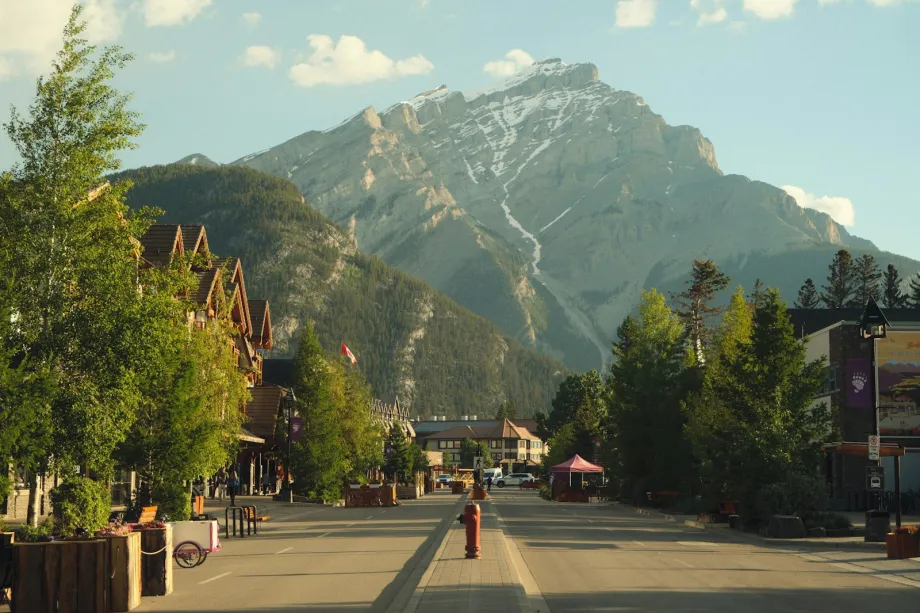
A slower pace in the Rockies
Two days in Banff National Park can feel generous or frantic, and the difference is mostly about geography. The townsite sits in a tight valley with limited road space, and summer traffic builds fast around the main sights. Choosing a logical order, moving with the light and accepting that you will miss things makes for a far better trip.
The plan below keeps the first day close to town, on foot and by gondola or switchback road, and the second day out on the loop roads east and west of the townsite.
Day one: town trails, a high view and hot water
Morning on the river
Start on Banff Avenue before the shops open, then drop down to the Bow River. A wide path follows the turquoise water toward Bow Falls, where the river spills over a broad step of dark rock. From there, stairs and trail climb the bank toward Surprise Corner, a lookout facing the historic castle-style hotel across the gorge with Mount Rundle behind it.
If you have energy left, the Hoodoos Trail continues through open pine forest to a viewpoint over the eroded spires above the Bow. Plan on a few hours for the full walk there and back. Leaving the car parked for the morning is a relief in July and August, when lots near the main attractions can be full well before lunch.
Afternoon above the valley
After lunch in town, go high. Sulphur Mountain has a gondola and a steep switchbacking hiking trail for those who prefer to earn the view. At the top, a boardwalk runs along the ridge to Sanson Peak and the old stone weather observatory. You look straight down on the street grid of the townsite, the loops of the Bow and the mouth of the Spray Valley. It is colder and windier up there than in town, even in midsummer, so carry a windproof layer.
A quieter alternative is the Mount Norquay road on the other side of the valley. The switchbacks lead to a lookout facing Mount Rundle, Cascade Mountain and the townsite. Bighorn sheep often rest on the rocky shoulders beside the road; give them room and do not stop in a traffic lane.
Evening soak
Finish at Banff Upper Hot Springs on the flank of Sulphur Mountain. The outdoor pool faces across the valley toward Rundle and is open through the year, with the water kept comfortably hot. The last hour or so before closing is often quieter than the late afternoon rush. Check hours and any maintenance closures before you go.
Day two: lakes, a parkway and a canyon
Morning around Lake Minnewanka
Northeast of town, a short loop road passes Johnson Lake, Two Jack Lake and Lake Minnewanka. Minnewanka is the largest lake in the park, a long reservoir stretching more than 20 kilometres into the mountains. The water is usually calmest early, before afternoon wind raises a chop. A shoreline path leads to the footbridge over Stewart Canyon.
Two Jack Lake is smaller and shallower, and on still mornings it reflects the sharp wedge of Mount Rundle. Johnson Lake has a flat loop through Douglas fir and pine, a good choice for a gentle walk with children. Parts of this area have seasonal restrictions, including winter road closures and group rules on some trails in bear season, so check Parks Canada before you set out.
Afternoon on the Bow Valley Parkway
Leave the Trans-Canada and take Highway 1A, the Bow Valley Parkway, which runs west toward Lake Louise at a lower speed through forest and open meadows. Seasonal travel restrictions apply on part of it in spring and autumn, so check Parks Canada for current dates.
Johnston Canyon is the main stop. Steel catwalks bolted to the limestone walls lead to the Lower Falls and, farther up, the Upper Falls. Parking is tight on summer afternoons; arriving early or taking the seasonal bus saves a lot of circling. Farther west, pullouts face Castle Mountain, a long, fortress-like peak, and interpretive panels tell the story of the valley, including the First World War internment camp that once stood near its base.
Dusk and wildlife
At dusk, elk, deer and bighorn sheep come out to graze along the road edges, and bears and wolves use the same valley bottoms. Parks Canada asks visitors to stay at least 30 metres from elk, deer and sheep, and at least 100 metres from bears, wolves and cougars. Watch bears and wolves from inside your vehicle, pull completely off the road and never feed any animal or leave food scraps behind. An animal that learns to associate people with food often ends up being destroyed.
Sudden stops on narrow roads create what locals call bear jams. If a pullout is full or an animal is right at the roadside, keep moving slowly instead of adding another car to the crowd.
Seasons and getting around
Summer brings long days, warm afternoons and the heaviest traffic. Winter brings snow, short days and quieter roads, along with closures on some secondary routes. May and October are unpredictable: a snowy morning can give way to a sunny afternoon, and higher trails often hold snow and ice into June. Layered clothing and light traction devices for your boots make the shoulder seasons much easier.
Roam Transit covers the townsite and runs seasonal routes to several of the stops above. In peak months it is often the simplest way to reach a trailhead without fighting for a parking space.
Frequently asked questions
How do you get around Banff without a car?
Roam Transit runs local buses in the townsite and seasonal routes to places such as Lake Minnewanka, Johnston Canyon and the Sulphur Mountain area. Check the current schedule, since routes and frequency change by season. Riverside trails also link downtown with Bow Falls on foot.
When are animals most active near the roads?
Early morning and evening, especially along forest edges and grassy verges. Drive slowly at those hours and use pullouts rather than stopping on the road.
Is two days enough for Banff?
It is enough for the townsite, one high viewpoint, a lake drive and a canyon walk. It is not enough for Lake Louise, Moraine Lake and the Icefields Parkway as well, so leave those for another trip rather than cramming them in.