
Banff through the year: weather, crowds and seasonal closures
Snow can fall in Banff in any month, and the season you pick decides which trails are open, how you reach Moraine Lake and how early you need to be at a trailhead.
Summer: long days and full parking lots
The park is busiest from late June to the end of August. Valley afternoons are usually warm, often in the low to mid twenties Celsius, and the evenings are long: around the solstice it stays light until roughly ten at night, which is the best time for a walk after the day crowds have gone.
Lake Louise and Moraine Lake usually lose their ice sometime in June. Their famous colour comes from fine rock flour carried in glacial meltwater, and it is strongest in mid to late summer when the melt is at its peak. Early in the season the water can look paler.
Handling summer logistics
The main pressure point is parking. At the best-known lakes and canyons, lots can be full early in the morning. Moraine Lake Road is closed to private vehicles, so access is by Parks Canada shuttle, Roam Transit or a commercial bus, and shuttle seats need to be reserved ahead. Lake Louise is served by the same shuttle system.
Expect slow traffic on the Bow Valley Parkway and around popular trailheads on summer weekends. Using transit, starting early or choosing less famous trails in Kananaskis or along the Icefields Parkway saves a lot of time. Wildfire smoke can drift in during dry spells, so it is worth checking air quality forecasts if you plan long days outdoors.
Autumn: larches and short golden weeks
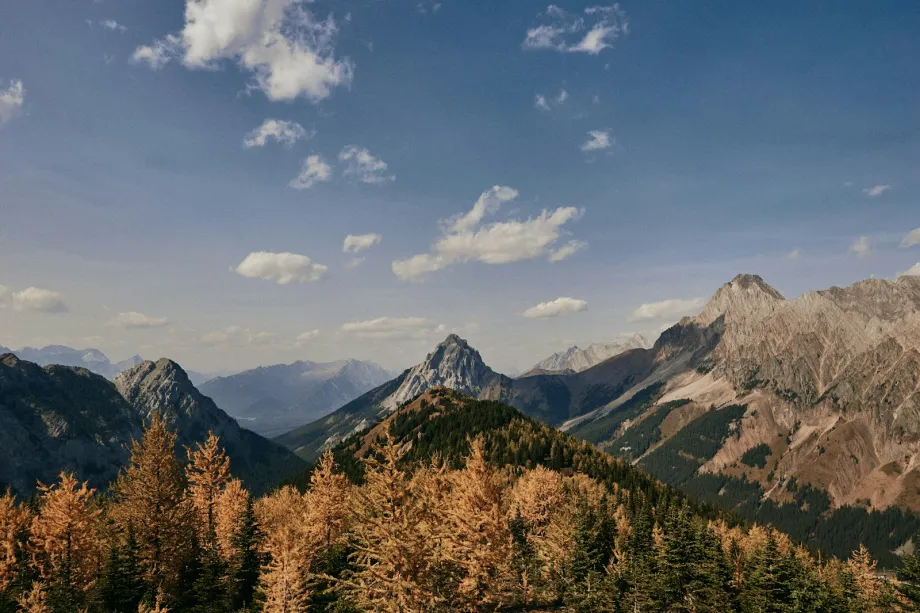
September cools things down quickly. Days are crisp, nights bring frost, and in the second half of the month the alpine larches turn yellow before dropping their needles. Larches are conifers that shed their needles each year, and they grow near treeline, so seeing them means a real hike.
Larch Valley above Moraine Lake, Healy Pass near Sunshine and Arnica Lake off Highway 93 South are well-known larch walks. The peak is short, usually a week or two in late September, and the trailheads can be as busy as any summer weekend.
Late autumn
October is quieter and less predictable. Many seasonal shuttles stop running around Canadian Thanksgiving. The lakes stay open, but high passes start to collect snow that will stay until summer. A mild afternoon can turn into a snowstorm with little warning, and shaded rock can ice over. Hikers going above treeline at this time of year should carry traction devices, warm layers and a headlamp, since the days shorten fast.
Winter: cold, clear and snowy
Winter in Banff runs roughly from November to April. Daytime highs in December and January are usually below freezing, and Arctic air masses can bring spells of minus 30°C or colder. Wind chill makes exposed skin vulnerable to frostbite, especially on lifts and open ridges.
Snow is reliable enough to support three ski areas inside the park: Mount Norquay, Sunshine Village and Lake Louise. Cross-country skiing, snowshoeing, ice walks in frozen canyons and skating on cleared lake ice are all popular, though natural ice conditions vary with snow and wind and are never guaranteed safe.
Preparing for the cold
Driving needs care. Parks Canada requires winter tires or chains on the Icefields Parkway through the winter season, and they are a very good idea on every mountain road. The Trans-Canada is cleared regularly but can close briefly in storms, and black ice forms on bridges and shaded stretches. Carry a blanket, warm clothing, food and a shovel.
Days are short around the winter solstice, with sunrise after eight and sunset around half past four. Snow hides trail markers, so a map and a reliable GPS or phone app matter on longer outings. Avalanche danger rises after heavy snow or strong wind; anyone heading into backcountry terrain needs avalanche training, a beacon, probe and shovel, and the daily avalanche forecast.
Spring: mud, melt and closures
April and May are the spring shoulder season. Ski areas often run into May, while the valley floor slowly thaws. Days can be mild, but trails are in transition: mud on low routes, a slippery mix of old snow and ice in the middle, and deep snow with avalanche hazard on the high passes into June.
Several restrictions apply at this time of year. Parts of the Bow Valley Parkway have seasonal travel restrictions, and some areas close to give wildlife space; check Parks Canada for current dates rather than relying on last year's.
Bears in early season
Grizzly and black bears leave their dens in spring and head for the valley bottoms, which clear of snow first. They feed on fresh green plants and on animals that died over the winter. That puts people and bears in the same places at the same time.
Carry bear spray on every trail, at every time of year, and keep it within reach rather than in your pack. In spring be especially alert: make noise in thick cover, keep your group together and respect any trail closures or group-size rules. They are there for good reasons.
Frequently asked questions
What is the best month for hiking in Banff?
July and August give the widest choice of high trails, as most snow has melted from the passes. September is cooler and quieter, and the larches turn gold in the second half of the month.
Can you drive to Moraine Lake?
Not in a private vehicle. The road is closed to personal vehicles, and visitors arrive by Parks Canada shuttle, Roam Transit or licensed commercial buses during the summer and early autumn season. The road closes for winter. Check Parks Canada for current dates and reservations.
How cold does Banff get in winter?
Daytime temperatures in midwinter are usually below freezing, and Arctic air can bring spells of minus 30°C or colder. Thermal layers, insulated boots and a face covering are worth packing.
Are trails closed in spring?
Higher trails stay under snow well into June and some carry avalanche risk. Lower trails open earlier but are often muddy or icy. Parks Canada also posts closures and restrictions to protect wildlife, so check current notices before you go.