
Golf in the Bow Valley, from altitude to elk
Elk grazing on a green is a normal sight on Bow Valley golf courses, along with thin air, fast-moving storms and a season that fits between late spring snow and early autumn frost.
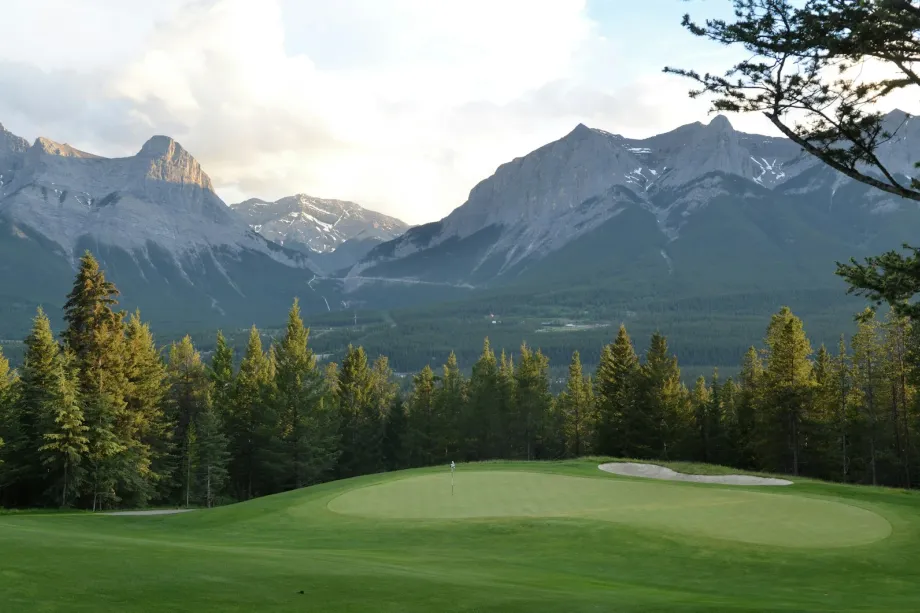
Golf between Banff, Canmore and Kananaskis comes with a backdrop that is hard to match anywhere: limestone peaks above every fairway, rivers alongside, and stands of lodgepole pine framing the holes. It also comes with conditions that lowland golfers do not expect, from altitude to wildlife.
Mountain layouts and how they play
Courses in the valley follow land shaped by glaciers and rivers. Holes run along old river channels and up onto terraces, cross creeks and cut through thick conifer forest. The turf changes from hole to hole depending on sun and shade. Areas tucked under steep slopes stay damp and soft for longer, while open river flats dry and firm up quickly.
Scale plays tricks on the eye. With rock walls rising high above the valley floor, it is hard to judge distance, and targets can look much closer or farther than a rangefinder says. Trust the numbers over your instincts.
The same applies on the greens. Putts often break toward the river or the low side of the valley even when the surface looks flat. Reading the wider landscape and the way water drains off the hillside often helps more than staring at the grass.
Design styles vary. Older, classic layouts tend to have narrower fairways lined with dense timber, where a wayward shot is often lost. Newer courses usually offer wider landing areas, which helps when gusts funnel down the valley, and put more emphasis on the angle into the green.
Season length and timing
The season is short. Courses typically open in May, once snow has gone from the lower fairways, and close in late September or October, when hard frosts return and the first snow dusts the valley.
Early season asks for patience. The ground is still cold, the grass grows slowly, and frost delays are common on May and June mornings. Tee times are often held until the sun clears the ridges and the turf is safe to walk on.
July and August are the high season. Long evenings let golfers play late, the fairways firm up, the greens get quicker and the afternoons are usually warm.
September is quieter, cooler and very beautiful, with aspens turning yellow along the edges of the courses. Shorter days make a late tee time risky if you want to finish all eighteen before dark.
Altitude, temperature and weather
The valley floor sits around 1,300 to 1,400 metres above sea level. Thinner air means less drag, so the ball carries noticeably farther than at sea level, and most players find they need to adjust their club choice. A few rounds are usually enough to recalibrate.
Temperature works the other way. Cold air is denser than warm air, so a drive on a chilly early morning will not go as far as the same swing on a hot afternoon. The difference between a frosty start and a warm finish can easily be a club or more on a long approach.
Weather moves fast. Wind channels along the valley and through gaps in the ranges, and summer afternoons often build thunderstorms over the peaks. A storm can bring a sharp drop in temperature, heavy rain, gusty wind and sometimes hail within a short time. When lightning is near, leave the course and get under proper shelter; open fairways and isolated trees are the worst places to be.
A sensible bag holds a packable rain jacket and rain pants, a warm fleece or windproof layer, a warm hat as well as a cap, sunscreen and lip balm for the strong mountain sun, and a refillable water bottle for the dry air.
Wildlife on the course
To elk, deer and bighorn sheep, a golf course is grazing land with good sightlines. Elk are the animals you are most likely to see on fairways, tees and greens, and coyotes and occasionally bears cross courses too.
In late spring, cow elk give birth and often hide calves in long grass near the edges of the rough. Mothers defend them fiercely and will charge people who come too close. In September and October the rut brings a different risk. Bulls become aggressive and unpredictable, sometimes gathering on greens or tees, bugling and sparring.
Keep well back from all wildlife, at least 30 metres from elk and much farther from bulls in the rut or cows with calves. If animals are in the way, wait, play around them or skip the hole, and tell course staff. Never try to move them by shouting, waving a club or driving a cart toward them. On courses inside Banff National Park, Parks Canada wildlife rules apply on the fairway just as they do on the trail.
Pairing golf with the rest of the valley
Long summer evenings make it easy to combine a round with something else. An early tee time leaves the afternoon for a riverside walk, a museum or a soak in hot water. More energetic visitors can add a paddle on a calm lake or a ride on the paved pathways that link parts of the valley.
Build in slack. Summer traffic between towns, frost delays, weather holds and busy parking can all stretch a day, and a golf round in the mountains rarely runs to a tight schedule.
Frequently asked questions
When is the golf season in the Bow Valley?
Most courses open sometime in May and close in late September or October. The exact dates depend on snowmelt in spring and frost in autumn, so check with each course.
Does the ball fly farther at altitude?
Yes. The valley floor sits around 1,300 to 1,400 metres above sea level, and the thinner air lets the ball carry noticeably farther than at sea level. Cold mornings take back some of that gain.
What should you do if elk are on the fairway?
Wait for them to move on, play another hole or ask the course staff. Do not approach, shout, wave clubs or drive a cart toward them, especially in calving season and during the autumn rut.
What should you carry for mountain weather?
A rain jacket, a warm layer, a hat, sunscreen and plenty of water. Weather changes fast, and a sunny morning can become a cold, wet afternoon.