
A first ski trip to Banff: resorts, passes and the cold
Three ski areas share Banff National Park, and none of them has a town at its base, so a first ski trip here means daily drives or buses from Banff or Lake Louise.
How skiing works around Banff
Skiing in Banff National Park is different from a typical resort holiday. There is no purpose-built village wrapped around a single mountain. The town of Banff sits in the valley inside a protected national park, and three separate ski areas lie around it. The region is known for dry, light snow, sharp limestone peaks and real winter cold.
First-time visitors often expect to ski straight from their hotel. With one exception, that is not how it works here. Most skiers take a shuttle or drive to the hill each morning, and they need to plan for dry air, deep cold and short daylight. Knowing that before you arrive makes the trip much smoother.
The three ski areas
Each area has its own character, elevation and terrain.
Mount Norquay
Norquay is the closest, a short drive up a switchback road from town. It is the smallest of the three, which makes it popular with families, locals grabbing a few hours, and anyone wanting an easy first day. The lower slopes are gentle and good for learning turns. Higher up, Norquay has steep, mogul-covered runs that challenge strong skiers. It has offered night skiing on some evenings in past seasons; check the current schedule.
Sunshine Village
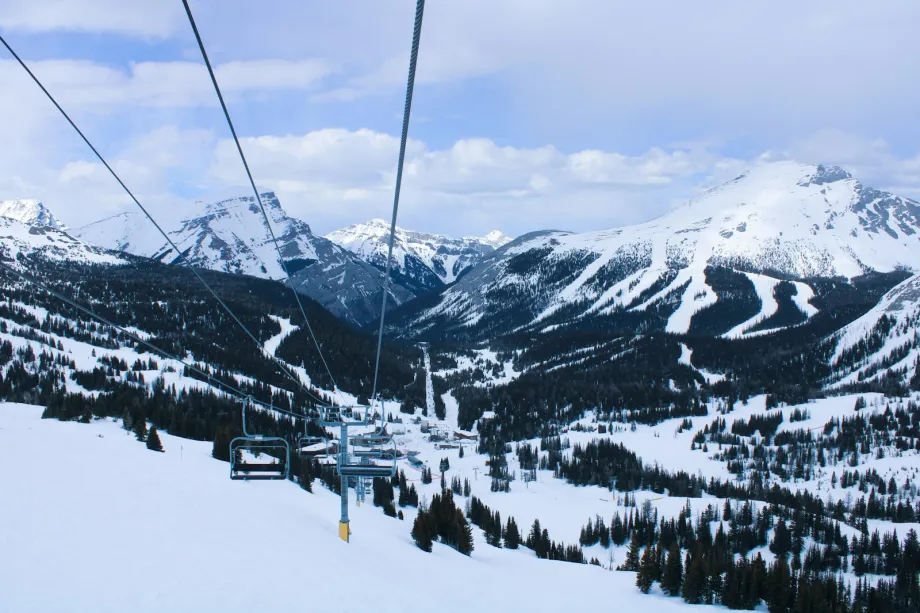
Sunshine lies a short drive west of town, up a side valley near the Continental Divide. A gondola carries skiers from the parking area to the village and the main lifts, which sit high up in open alpine country. The terrain spreads over several peaks with wide bowls, long cruising runs and steep off-piste zones. Snow often lasts well into spring at this elevation, but the open terrain is exposed to wind and flat light on grey days.
Lake Louise Ski Resort
Lake Louise is the farthest from Banff, close to the hamlet of Lake Louise. It is the largest of the three and one of the bigger ski areas in Canada, with a broad front side and big back bowls. Easy runs come down from many of the lifts, which lets mixed-ability groups ride up together and choose different ways down. On clear days the views reach across the valley toward the Victoria Glacier and the peaks above the lake.
Multi-day and multi-area passes
For a stay of several days, a multi-day pass is usually better value than buying a daily ticket at the window. A combined pass covering all three areas lets you choose each morning based on snow, wind and visibility, which matters a lot in the Rockies.
Pass products, prices and inclusions change from season to season. Some packages have included the ski shuttle; others have not. Buying online ahead of time is usually cheaper than paying at the ticket office. Read the details carefully, especially what happens if you take a rest day in the middle of your trip.
Where to stay
The choice comes down to evening life versus morning travel.
Staying in Banff puts restaurants, grocery stores, rental shops and other winter activities within walking distance. The trade-off is time on the road. Norquay is minutes away and Sunshine is close, but Lake Louise is a longer drive, roughly 45 minutes or more in winter conditions.
Staying at Lake Louise cuts the commute to the biggest ski area and gives a quieter, more remote feel, with fewer places to eat and very little nightlife. It suits people who want first chair at Lake Louise every day.
The one true ski-in, ski-out hotel in the park is up at Sunshine Village. Once the gondola stops for the night, guests are on the mountain until morning. That means quiet evenings and fresh tracks, but no easy trip to town.
The cold and the short days
Winter air in the Rockies is cold and dry. December and January are the coldest months, with daytime temperatures often well below freezing and occasional Arctic outbreaks that push them much lower.
Dry air gives light snow but also dries out skin and lips and dehydrates you faster than you notice. Bring lip balm, moisturizer and a water bottle. Dress in layers. Synthetic or merino wool base layers work best; cotton holds sweat against the skin and chills you on the lift. The outer jacket and pants should block wind and snow. A face covering or neck gaiter and warm mittens protect against frostbite on cold chairlift rides.
Days are short in early winter. The sun comes up around eight and drops behind the peaks by mid-afternoon, and lifts usually close in the late afternoon. Starting early gives you the most skiing. By March the days are noticeably longer and milder, although big snowstorms remain common into spring.
Renting gear and packing
The sensible approach is to rent the heavy equipment and bring the clothing.
Renting skis or a snowboard, boots and poles in Banff or at the hill is easy. Shops carry everything from basic packages to high-end demo gear. Renting in town also means you can drop in after skiing to swap boots or change skis. Boot fitting takes time, so going on the afternoon you arrive saves your first morning.
Rental shops do not supply clothing, so bring your own:
- base layer tops and bottoms in wool or synthetic fabric
- a fleece or light down mid-layer
- a windproof, waterproof ski jacket and pants
- several pairs of wool ski socks, worn one pair at a time
- insulated mittens or gloves
- goggles with a lens for low light
- a warm hat for town and a neck gaiter or balaclava for the lifts
Most skiers wear helmets, and they can be rented with a ski package. If you bring your own goggles, check that they sit snugly with the rented helmet, since a gap lets in cold air and fogs the lens.
Frequently asked questions
How do skiers get from Banff to the ski areas?
Ski shuttles run in winter between the townsite and the three areas, and some lift ticket packages include them. Driving is straightforward on cleared highways, but winter tires are strongly recommended. Check current shuttle schedules and fares before you arrive.
Are there good options for beginners?
Yes. All three areas have learning zones and gentle progression runs. Norquay is close to town for short lessons, and Lake Louise and Sunshine both have easy routes from higher up the mountain, so beginners can enjoy the alpine views too.
Should you bring skis or rent them?
For a first visit, renting in Banff or at the hill is usually simpler. Shops can swap boots that do not fit and match skis to the conditions. Spend your packing space on good clothing layers instead.
What is the coldest time for a ski trip?
December and January are usually the coldest months, with short days and occasional Arctic cold snaps. A windproof shell, face covering and warm base layers matter most then.